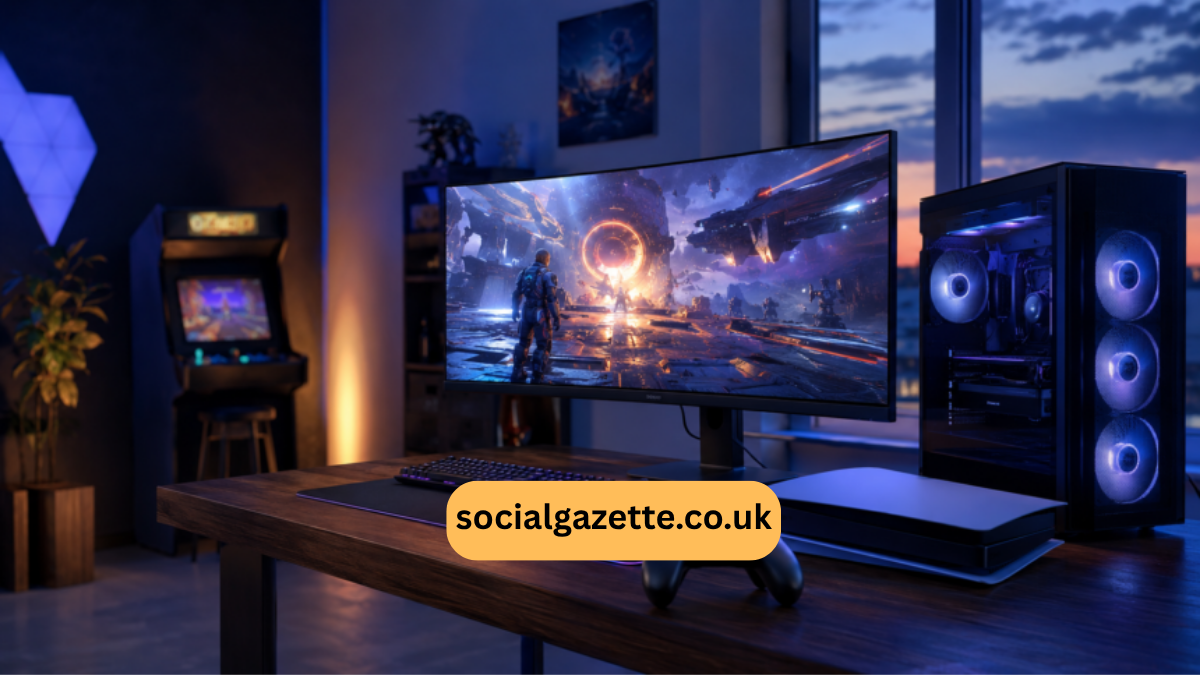
Revolvertech Gaming: Exploring the Future of Digital Entertainment
The gaming industry is changing faster than ever, and new platforms, technologies, and communities are constantly emerging. Among the terms attracting attention in the digital entertainment space is revolvertech gaming, a keyword associated with the growing intersection of gaming, technology, online communities, and interactive entertainment. As players increasingly expect better graphics, smoother performance, personalized experiences, and accessible gameplay, technology has become just as important as the games themselves.
For modern gamers, the experience is no longer limited to sitting in front of a traditional console or computer. Gaming now includes cloud platforms, mobile devices, esports, online communities, artificial intelligence, virtual environments, and social interaction. This broader transformation provides an interesting context for understanding revolvertech gaming and why technology-focused gaming concepts continue to attract interest.
What Is Revolvertech Gaming?
The phrase revolvertech gaming can be understood as a technology-oriented gaming concept that reflects the relationship between modern digital entertainment and technological innovation. While the exact meaning can depend on the context in which the term is used, it fits naturally within a gaming environment where software, hardware, connectivity, and interactive experiences work together.
Gaming technology has developed considerably over the past few decades. Early video games relied on relatively simple graphics and limited processing capabilities. Today, players can enter enormous virtual worlds with detailed environments, realistic physics, advanced character behavior, and multiplayer systems connecting people across different countries.
This evolution demonstrates why technology-focused gaming terms have become increasingly relevant. Players are not simply purchasing a game anymore. They are entering an ecosystem that can include downloadable content, online services, competitive events, digital communities, streaming, and constantly evolving software.
Why Technology Matters in Modern Gaming
Technology is at the heart of almost every major improvement in gaming. Faster processors allow developers to create larger and more detailed environments. Modern graphics processing units can produce realistic lighting, reflections, shadows, textures, and animation. High-speed internet enables multiplayer experiences with players located thousands of miles apart.
The significance of revolvertech gaming can therefore be considered within this larger technological movement. Gaming platforms increasingly depend on powerful infrastructure to deliver reliable experiences. Even a visually impressive game can become frustrating if loading times are excessive, servers are unstable, or performance drops during important moments.
Technology also affects accessibility. Mobile gaming has made interactive entertainment available to people who may not own expensive gaming computers or consoles. Cloud-based services are also exploring ways to reduce the importance of high-end local hardware by allowing demanding games to be processed remotely.
The Rise of Online Gaming Communities
One of the biggest changes in gaming has been the development of online communities. Games have transformed from isolated entertainment experiences into social environments where players communicate, cooperate, compete, and build long-term relationships.
A technology-focused concept such as revolvertech gaming fits naturally into this environment because modern gaming depends heavily on connectivity. Multiplayer games require sophisticated servers, matchmaking systems, communication tools, account management, and security features.
Online communities can also extend beyond the game itself. Players often communicate through social platforms, streaming services, forums, and dedicated community spaces. Content creators can turn gaming sessions into entertainment watched by millions of people.
This has created an ecosystem where gaming, technology, social media, and digital content increasingly overlap.
Graphics and Immersive Experiences
Visual quality remains one of the most recognizable areas of gaming innovation. Developers are continuously experimenting with advanced rendering techniques, realistic character models, dynamic environments, and cinematic presentation.
Modern hardware can process enormous amounts of graphical information in real time. Technologies such as ray tracing can produce more realistic lighting and reflections, while high-resolution displays allow players to see much greater visual detail.
The broader revolvertech gaming concept can be viewed through this lens of continuous innovation. As hardware improves, developers gain more opportunities to create immersive worlds that feel increasingly responsive and believable.
However, graphics are only one part of the experience. A technically impressive game still needs strong gameplay, compelling storytelling, responsive controls, and thoughtful design.
Artificial Intelligence and Gaming
Artificial intelligence is becoming another important part of the gaming industry. Developers have used computer-controlled characters for decades, but newer AI technologies are creating additional possibilities.
AI can help create more responsive non-player characters, dynamic environments, personalized experiences, and automated development tools. It may also assist developers with testing, animation, dialogue generation, and game-world design.
For revolvertech gaming, the connection with AI represents the wider direction of technology-driven entertainment. Future games may increasingly adapt to individual players instead of providing exactly the same experience to everyone.
For example, an AI-powered system could potentially analyze how someone plays and adjust difficulty, enemy behavior, recommendations, or available challenges. The goal would be to create a more personalized experience without sacrificing the creative direction established by developers.
Mobile Gaming and Accessibility
Mobile gaming has dramatically expanded the global gaming audience. Smartphones are now powerful enough to run sophisticated games that were once associated primarily with dedicated gaming hardware.
The convenience of mobile devices means players can access games during short breaks, while traveling, or from almost any location with a suitable internet connection. Free-to-play models have also reduced the initial financial barrier for many players.
The growth of mobile entertainment is important when considering revolvertech gaming because it demonstrates how gaming technology is becoming more portable and accessible.
Mobile gaming also encourages developers to rethink traditional control systems. Touchscreens, motion sensors, Bluetooth controllers, and cloud connectivity provide developers with multiple ways to design interactive experiences.
Cloud Gaming and the Changing Hardware Landscape
Cloud gaming represents another potentially significant development. Traditionally, players needed hardware capable of running a game locally. Cloud technology changes that model by moving much of the processing to remote servers.
The player receives a streamed version of the game through an internet connection. In theory, this can allow less powerful devices to access experiences that would otherwise require expensive hardware.
There are still challenges, particularly regarding internet quality, latency, server availability, and infrastructure costs. Nevertheless, cloud technology continues to influence discussions about the future of gaming.
The evolution of revolvertech gaming can therefore be considered part of a broader movement toward flexible gaming ecosystems where players may no longer be tied to a single device.
Esports and Competitive Gaming
Competitive gaming has grown into a major form of entertainment. Professional players compete in organized tournaments, while millions of fans follow matches online.
Esports depends heavily on technology. Reliable servers, high-performance computers, low-latency networks, broadcasting systems, analytics tools, and streaming platforms all contribute to the competitive experience.
For players, even small technical problems can have significant consequences. Input delay, frame-rate instability, or network interruptions can affect competitive performance.
This illustrates a fundamental point about revolvertech gaming: technology is not simply an additional feature surrounding gaming. It can directly determine how games are played, experienced, and consumed.
Cybersecurity and Player Protection
As gaming becomes increasingly connected, security has become more important. Gaming accounts may contain valuable digital purchases, personal information, achievements, and social connections.
Developers and platform operators therefore need to protect users against account theft, fraudulent activity, malicious software, and other online threats.
Players also have responsibilities. Using strong passwords, enabling available security protections, avoiding suspicious downloads, and being careful with unfamiliar messages can reduce the risk of account compromise.
Any technology-centered gaming ecosystem, including the broader idea represented by revolvertech gaming, must take security seriously if it wants to build long-term trust.
The Importance of Game Design
Technology alone cannot create a successful game. Some of the most memorable gaming experiences have succeeded because of creative ideas, engaging mechanics, memorable characters, and strong storytelling rather than simply having the most advanced graphics.
Game design determines how players interact with the world. Developers must consider controls, progression, difficulty, rewards, pacing, level design, and player motivation.
This is where technology and creativity must work together. The best gaming experiences use technological capabilities to support meaningful gameplay rather than using technology simply because it is available.
The future of revolvertech gaming will likely depend on this balance. New tools can expand what developers are capable of creating, but creative vision remains essential.
Virtual Reality and Augmented Reality
Virtual reality and augmented reality continue to offer new possibilities for interactive entertainment. Virtual reality places players inside digitally generated environments, while augmented reality combines digital elements with the physical world.
These technologies can create experiences that feel fundamentally different from traditional gaming. Instead of controlling a character entirely through a screen, players may physically interact with virtual objects or environments.
Although challenges such as hardware cost, comfort, motion tracking, and software availability remain, continued technological development could make immersive gaming more practical for a broader audience.
This area provides another example of how revolvertech gaming can be associated with the industry’s ongoing search for new forms of interaction.
What Gamers Can Expect in the Future
The future of gaming is likely to be shaped by several technologies developing simultaneously. Artificial intelligence could make virtual characters more responsive. Cloud infrastructure could make games more accessible across devices. Faster networks could improve multiplayer experiences, while advanced graphics technology could make digital environments increasingly realistic.
At the same time, developers may focus more heavily on personalization. Players could receive recommendations and experiences based on their interests, skill levels, and playing patterns.
Gaming may also become more integrated with other forms of digital entertainment. Streaming, social communities, esports, virtual events, and interactive storytelling are already beginning to overlap.
In this environment, revolvertech gaming represents an interesting keyword for exploring the larger relationship between gaming and technology.
Challenges Facing Technology-Driven Gaming
Despite its exciting possibilities, technology-driven gaming also faces challenges. Hardware can be expensive, while advanced games may require significant storage space and powerful internet connections.
Privacy is another concern. Connected games can collect various forms of user information, making responsible data management increasingly important.
There are also concerns about excessive monetization. In-game purchases, subscriptions, downloadable content, and other revenue models can create debates about fairness and transparency.
Developers therefore face the challenge of introducing technological innovation while maintaining player trust and delivering genuine entertainment value.
Why Revolvertech Gaming Matters
The growing interest surrounding revolvertech gaming reflects a broader reality: gaming and technology can no longer be treated as separate industries. Modern games depend on sophisticated hardware, software, networks, artificial intelligence, graphics technology, cybersecurity, and digital infrastructure.
At the same time, gaming can influence the development and adoption of new technologies. Demand from gamers has contributed to improvements in graphics hardware, displays, processors, networking equipment, and immersive devices.
This two-way relationship makes gaming an important part of the broader technology landscape.
Conclusion
Gaming has evolved from simple digital entertainment into a complex technological ecosystem. From powerful graphics and artificial intelligence to cloud infrastructure, mobile devices, esports, virtual reality, and online communities, technology continues to reshape how people play and interact.
The concept behind revolvertech gaming can be understood within this larger transformation. It highlights the growing importance of technology in creating modern interactive experiences and demonstrates why innovation remains central to the gaming industry.
As developers continue experimenting with new tools and players demand richer experiences, the future of gaming is likely to become more connected, immersive, accessible, and personalized. Technology will continue to provide the foundation, but creativity, thoughtful design, security, and player-focused experiences will ultimately determine which innovations have lasting value.
You May Also Read: socialgazette